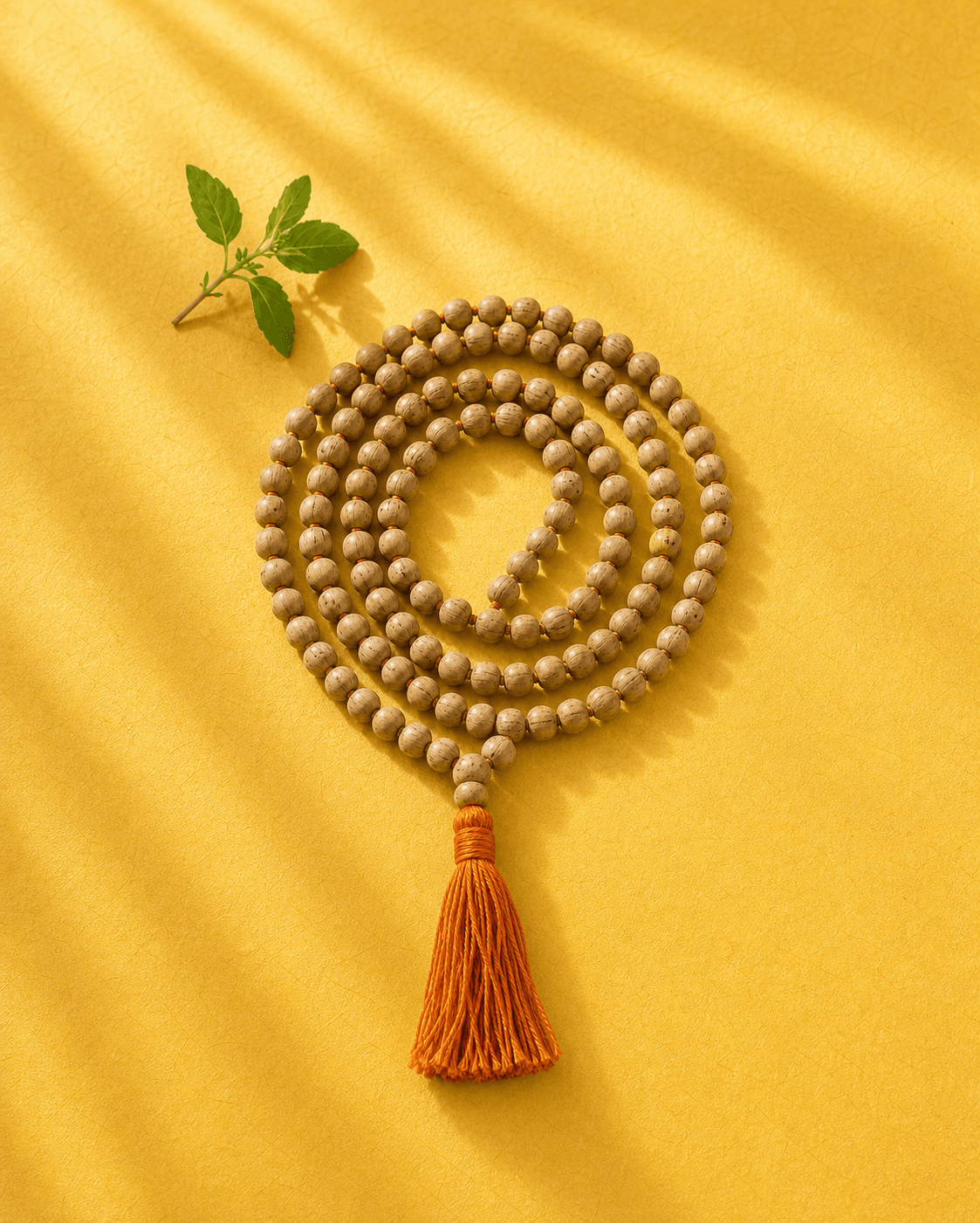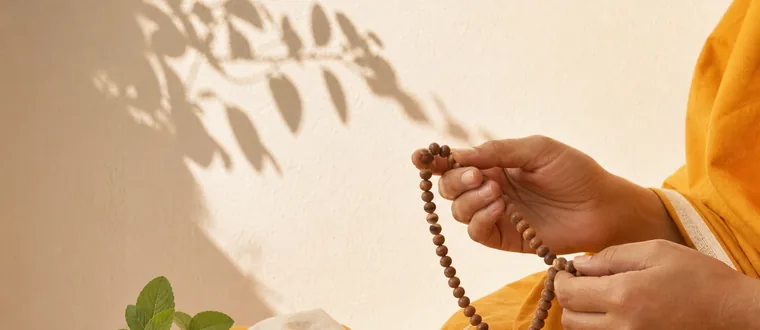
Tulsi is not chosen for hardness or for grain. It is chosen because of what the plant is understood to be, and every step of the making follows from that.
The plant first
Beads are cut from stems that have completed their life in the ground rather than from plants taken for the purpose. The wood is a by-product of a plant that was cared for, not a crop.
Why it is not polished
Tulsi is left unfinished. Lacquer and wax would seal the surface and change how the bead ages, and both are avoided for that reason.
The colour deepens with use. A mala that has been chanted on for a year does not look like one from the shelf, and that is the intended outcome rather than wear.
Handling follows meaning
Because the material is understood as a presence rather than as a bead, the handling conventions are not decoration. They are the practical form of the same idea.